
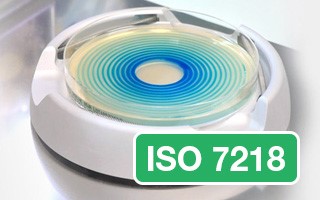
Webinaari: How can you adapt your protocol to the ISO 7218 standard and its latest updates?

ISO 7218 is as the reference standard for microbiological techniques in the food sector. Its latest update introduces several changes designed to enhance result reliability and improve the control of analytical risks.

This webinar is designed to help you adapt your internal protocols to these new requirements.

  1. The main changes introduced in the standard
  2. Their impact on laboratory practices
  3. Practical recommendations for effective compliance
  4. Q&A

If you can’t attend the live webinar, you can still register to receive the recording and slides!


Presented by

Iseline Sanséau

Field Application Scientist


Thursday October 23th

10:00 AM (Europe/Paris)

Duration: 30 minutes

Language: English
SIGN UP

What are the benefits of real time colony counting in microbial analysis?

Environmental monitoring is an important part of the microbiological quality control in different industries such as pharmaceutical, cosmetic or food. It includes surfaces, air and water testing. While surface testing is mainly carried out using contact plates, air and water testing requires the use of filtration membranes to filter out the sample to determine the presence or absent of microorganisms.

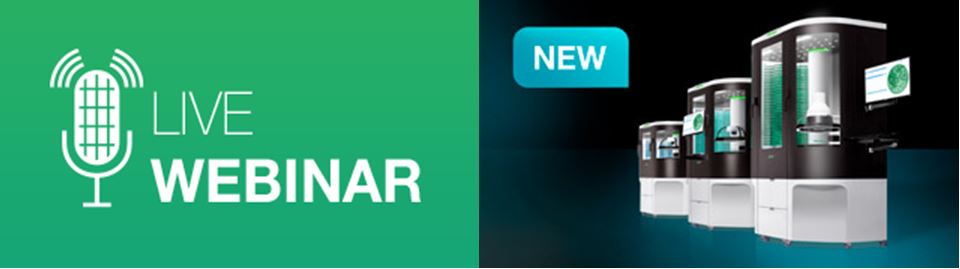
The aim of this webinar is to assess the performance of colony counting on different types of culture media by the real-time colony counter, i.e., ScanStation.

In this webinar, we will discuss about these following topics:

  1. Counting performance on filtration membranes
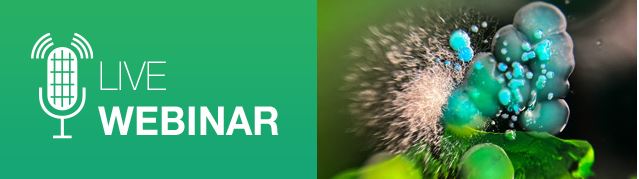
  2. Mold detection in air sampling analysis
  3. New ScanStation V9 software features
  4. Q&A

Thursday March 13th

Time:11:00 AM

Duration: 30 minutes

Language: English
Presented by: Thomas Alexandre, PhD

Field Application Support Scientist


If you can’t attend the live webinar, you can still register to receive the recording and slides!


Register now!

Webinar – Modern microbiology: Part II, different microbiological analysis methods

In the part I of the webinar on the modern microbiology, we reviewed all the culture media which allow diverse microbiological analyses.

With the rise of biotechnologies from the 70’s, alternative methods of biochemistry, molecular biology or biophysics will also develop in complementarity with culture media, making it possible to improve analysis performance.

In this webinar, we will discuss about the following topics:

  1. Review on alternative methods
  2. Application fields of the alternative methods
  3. Advantages compared to culture media

Live Q&A session

Tuesday May 28th

10:00 am (Europe/Paris)

Duration: 30 minutes

Language: English
REGISTER NOW

How does Interscience prevent musculoskeletal disorders (MSD) in laboratories?

Work-related musculoskeletal disorders (MSD) represent more than 60% of occupational diseases in Europe resulting in long-term illness or financial compensation due to sequelae. They are considered as a major challenge for improving the quality and efficiency of the work environment.

The microbial laboratory activity is also concerned by the MSD problematic, in particular because of repetitive movements during sample manipulations or Petri dish plating. In this webinar, we will present you the possible ergonomic approaches in the overall workflow from the sample preparation to the microbiological analysis.

We will cover the following topics:

  1. Ergonomic approaches of Interscience
  2. Customer testimonial
  3. Live Q&R

Tuesday April 30th

11:00 am (Europe/Paris)

Duration: 30 minutes

Language: English

REGISTER NOW

If you can’t attend the live webinar, you can still register to receive the recording and slides!

How to optimize traceability of microbiological analysis?

Description

The sample traceability during microbiological analysis is a crucial process to guarantee the quality and reliability of the result. Data integrity impacts the daily work and the microbiological analysis follow-up, both in paper and digital form.
Petri dish labeling optimizes the tracking from the sample to the result. This step is the beginning of the traceability.

INTERSCIENCE offers new solutions that facilitate the tracking of the samples during the microbiological analysis.

During this webinar, we will discuss the following topics:
▶ Petri dish labelling, at what stage of the analysis?
▶ What is the impact of semi-automated labeling?

▶ Live Q&A

Tuesday March 26

11:00 AM (Europe/Finland)

Duration: 30 minutes

Language: English

REGISTER NOW

WEBINAARI: How to optimize the traceability of microbiological analysis?

The sample traceability during microbiological analysis is a crucial process to guarantee the quality and reliability of the result. Data integrity impacts the daily work and the microbiological analysis follow-up, both in paper and digital form.

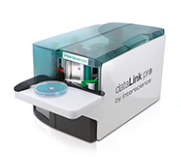
Petri dish labeling optimizes the tracking from the sample to the result. This step is the beginning of the traceability. Interscience offers new solutions that facilitate the tracking of the samples during the microbiological analysis.

During this webinar, we will discuss the following topics:

  1. At what stage in the analytical workflow should Petri dishes be labelled?
  2. What is the impact of semi-automated labeling?
  3. Live Q&A


Thursday December 7th

10:00 AM (Europe/Paris)

Duration: 30 minutes

Language: English
Presented by

Iseline Sanséau

Field Application Support Scientist


REGISTER NOW

History of the Petri dish from Pasteur to automation

The Petri dish is a very common tool used inall fields
of laboratories (food, pharmaceutical, cosmetic, academic…).
To start this new season, we recount the history of the Petri dish.

In this Webinar we will talk about:

  1. The Petri dish history
  2. How is Interscience included in this history?

Questions/Answers session

Tuesday September 19th

10:00 AM (Europe/Paris)

Duration: 30 minutes

Language: English
If you can’t attend the live webinar, you can still register to receive the recording and slides!

REGISTER NOW